
Aviator Target Ladder: 1.5x to 10x
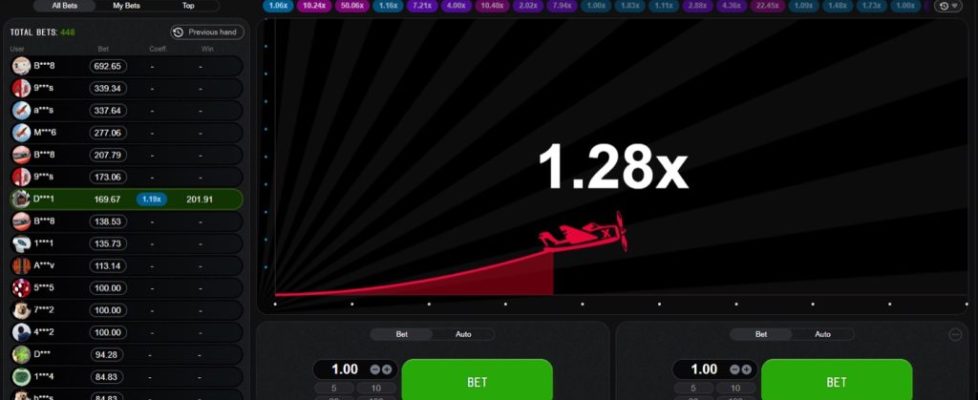
Aviator is a crash game by Spribe built around one rising multiplier. The multiplier starts at 1.00x, increases during the round and can crash before a player cashes out.
This guide compares four targets: 1.5x, 2x, 5x and 10x. It explains the probability of reaching each target, what the figures mean for win rate, and how to match a target to a planned session without treating a short-term result as a prediction.
How Aviator Rounds Work
Aviator uses a rising curve that can crash at any point after take-off. Spribe classifies the game as a crash game and instant game, not as a slot.
The round’s crash point is fixed before take-off through a provably fair process. A server seed is committed with a SHA-256 hash, player client seeds are combined with it, and the inputs become available for checking after the round.
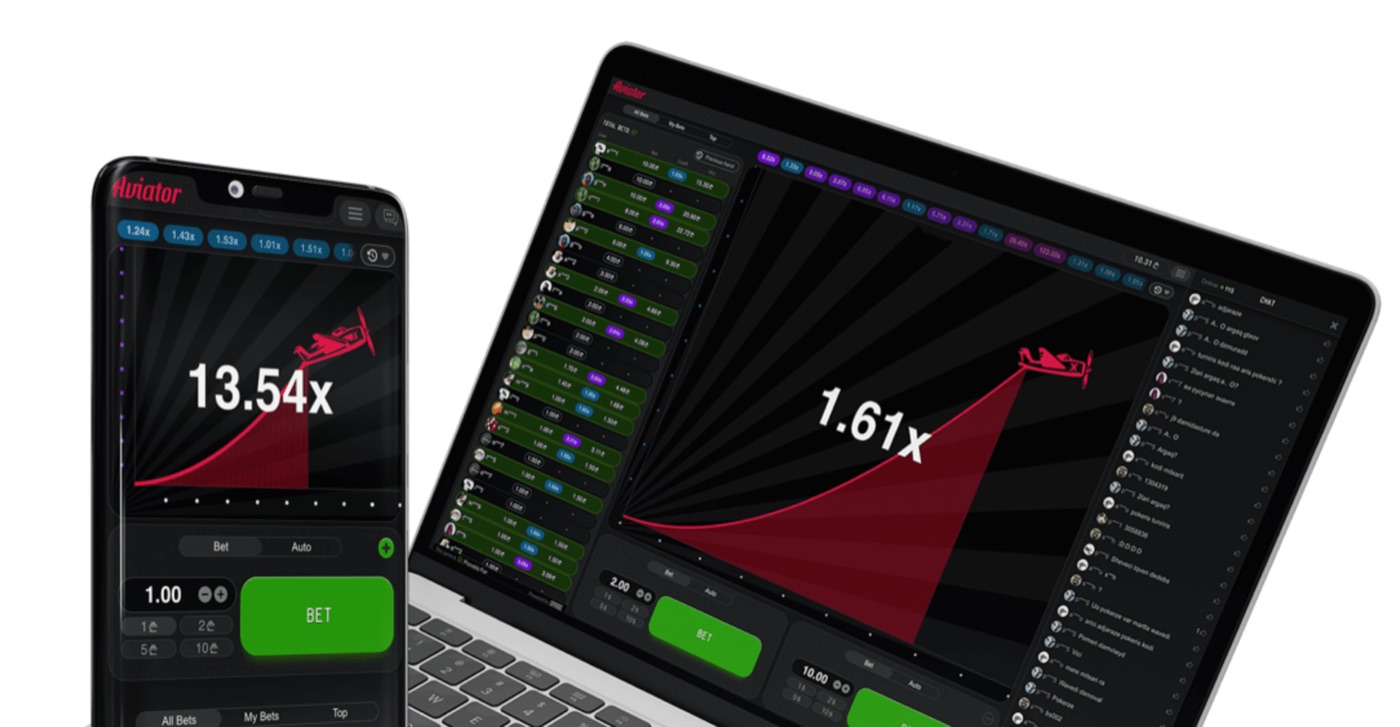
Aviator displays different live multipliers on a phone and laptop.
A player selects a stake and can cash out while the multiplier is still rising. If the target is reached first, the gross return equals the stake multiplied by that target. If the crash happens first, the bet loses.
- A 1.5x cash-out returns 1.5 times the stake when the round reaches 1.5x.
- A 2x cash-out returns twice the stake when the round reaches 2x.
- A 5x cash-out returns five times the stake when the round reaches 5x.
- A 10x cash-out returns ten times the stake when the round reaches 10x.
A return includes the original stake. For example, a $10 stake cashed out at 2x produces a $20 gross return, which means a $10 gain before considering other bets or previous results.
The game provides two bet panels in each round. Each panel can have a separate stake and cash-out, so one round can use different targets, but each target still faces the same crash process.
Target Probability Numbers
Aviator has a 97% RTP and a 3% house edge. The probability that a round reaches multiplier m is 0.97 divided by m.
The probability figure describes the chance that the round reaches a target, not the percentage of a player’s total stake returned over a short session. A target’s round-level win rate can therefore be compared directly with its multiplier.
| Target | Chance of reaching target | Approximate round win rate | What a win returns |
|---|---|---|---|
| 1.5x | 64.7% | About 65 in 100 rounds | 1.5 times the stake |
| 2x | 48.5% | About 49 in 100 rounds | 2 times the stake |
| 5x | 19.4% | About 19 in 100 rounds | 5 times the stake |
| 10x | 9.7% | About 10 in 100 rounds | 10 times the stake |
The ladder shows the trade-off clearly. A 1.5x target reaches more rounds than a 2x target, while a 5x or 10x target reaches fewer rounds but pays more when it does arrive.
- At 1.5x, the stated probability is 64.7%.
- At 2x, the stated probability is 48.5%.
- At 5x, the stated probability is 19.4%.
- At 10x, the stated probability is 9.7%.
About 3% of rounds crash instantly at 1.00x, or roughly 1 in 33 rounds. That figure explains why no target is guaranteed, including the lowest target in this ladder.
The expected value is negative 3% of the stake at every cash-out target. A different target changes the variance of results, but it does not remove the house edge.
Matching Targets To Sessions
Aviator rounds last about 8 to 30 seconds, with 60 to 90 rounds possible in an hour. A session target should therefore describe how much exposure a player accepts, not a prediction about the next multiplier.
A 1.5x target has a 64.7% chance of being reached, while a 10x target has a 9.7% chance. Those two figures create different patterns of wins and losses across the same number of rounds.
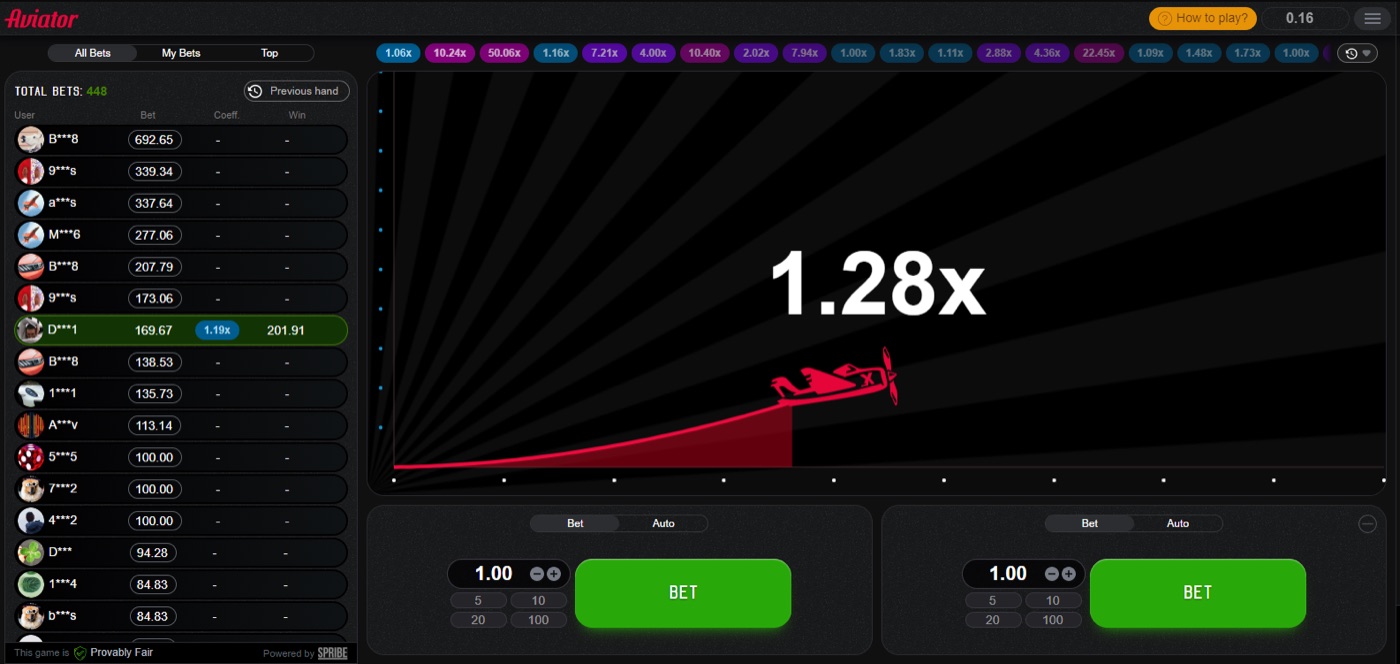
The Aviator plane rises while the round multiplier increases.
A short session with a low target may suit a player who wants fewer high-multiplier attempts, but it still carries the 3% edge and can include an instant crash. A higher target may suit a player who accepts more losing rounds in exchange for a larger return on an occasional hit.
- Use 1.5x when the session plan prioritises a lower target and accepts modest returns.
- Use 2x when the plan accepts that fewer than half of rounds reach the target.
- Use 5x when the plan allows many losing rounds before a larger multiplier arrives.
- Use 10x when the plan treats the target as an occasional result rather than a regular win.
These are descriptions of risk profiles, not recommendations or forecasts. Rounds are independent, so a sequence of low multipliers does not make a high multiplier due.
For example, consider ten equal bets at one chosen target. The 1.5x target has a 64.7% chance per round, but that does not mean exactly six or seven wins will occur. The 10x target has a 9.7% chance per round, but ten rounds do not guarantee one 10x result.
A session plan can set a fixed number of rounds, a fixed total stake or a loss limit. Stake size depends on the operator, and the available information gives typical stakes from about $0.10 to $100 per bet, depending on the operator.
Splitting Stakes And Cash-Outs
Aviator provides two bet panels with separate cash-outs in one round. The interface also includes Auto Cash-Out, which submits a preset multiplier, and Auto Bet or Auto Play for 10 to 100 rounds.
Separate panels allow a player to assign different targets to different stakes. The split changes how returns arrive, but the combined bets still face the same 3% house edge.
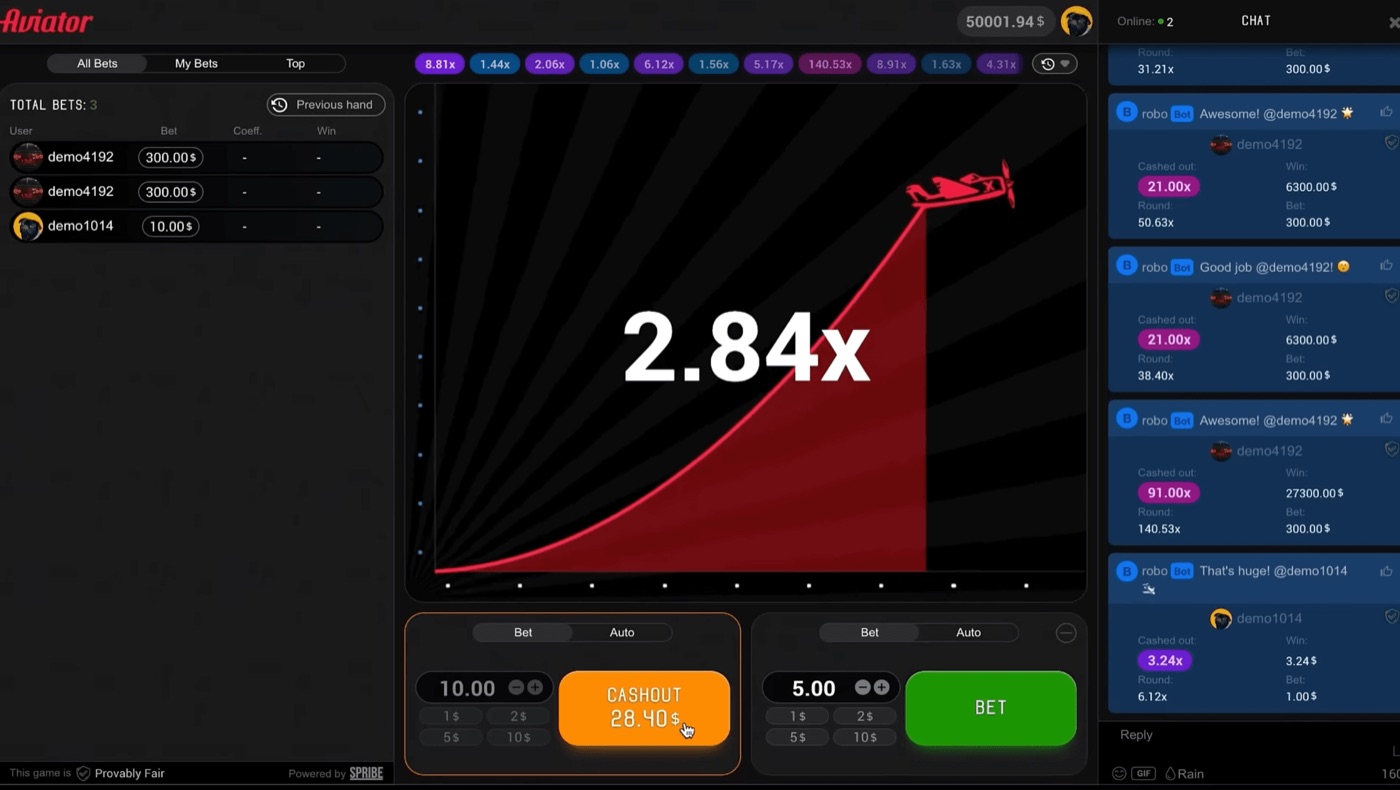
The interface shows live bets, chat and a cash-out at 28.40x.
A common guide approach uses one lower target and one higher target. For example, one bet may use 1.5x or 2x while another aims at 5x or 10x. This can produce a lower cash-out on some rounds and a larger cash-out on fewer rounds, but it cannot turn a negative expected value into a positive one.
A split example makes the arithmetic clear. A player could place $5 at 1.5x and $5 at 5x. If the round reaches 1.5x but crashes before 5x, the first bet returns $7.50 and the second bet loses $5. The combined result is $2.50 returned from $10 staked, a loss of $7.50 for that round.
If the same round reaches 5x, both bets can cash out at their selected targets. The gross return becomes $7.50 plus $25, or $32.50 from the $10 total stake. This is one result, not a session expectation.
- Set the lower target before the round starts.
- Set the higher target before the round starts.
- Keep the two stakes separate in the session record.
- Record gross returns and total stakes rather than counting only winning bets.
Auto tools reduce the need to click each round, but they do not improve probability. A stop-on-win or stop-on-loss setting can end an automated sequence, while the preset target remains exposed to the same round outcome.
During live play, the cash-out request must reach the server before the crash. A time-out can result from latency or a slow device, so a displayed multiplier does not guarantee that a late request will settle at that number.
Win Rate And Bankroll Exposure
Aviator’s 1.5x target has the highest listed win rate in this ladder at 64.7%. Aviator’s 10x target has the lowest listed win rate at 9.7%.
Win rate alone does not measure profit because each target pays a different amount and the 3% house edge applies at every cash-out target. A player can record several wins at 1.5x and still lose money after losing rounds and total stakes are counted.
One useful comparison is the break-even frequency before the house edge: a 1.5x bet needs to win more than two out of three times to overcome its payout structure, while the stated probability is 64.7%. A 2x bet needs to win more than half of its rounds, while the stated probability is 48.5%.
The same relationship appears at higher targets. A 5x bet needs a 20% win frequency to break even before the house edge, while its stated chance is 19.4%. A 10x bet needs 10% to break even before the house edge, while its stated chance is 9.7%.
Those small differences reflect the 3% house edge. They also show why a target that seems to produce a high payout cannot be judged only by its multiplier.
- Track every stake placed, including bets that cash out early.
- Track every gross return at its actual multiplier.
- Keep the target and result for each round.
- Stop when the planned loss limit is reached.
Guides commonly suggest staking no more than 2% of a bankroll per round and setting separate loss and win limits. Martingale, Fibonacci and D’Alembert systems do not beat the 3% edge; Martingale also doubles the stake after each loss and reaches 1,024 times the base stake after ten losses.
Play only with money set aside for gambling, and stop if the session exceeds the planned loss limit.
For gambling comparisons involving a crash game, multiplier, cash-out or stake, betnacional aviator can appear in bookmaker discussions, but the target probabilities remain those stated for Aviator itself.
Fairness And Session Records
Spribe publishes a SHA-256 server-seed hash before each round. The crash point is fixed before take-off, and the verification tool inside the game can check the revealed inputs after the round.
The operator and Spribe cannot change a result after the round starts. This fairness process does not make a target more likely, because every target still uses the same probability formula.
The round history at the top of the interface records previous multipliers. The live bets panel includes All Bets, My Bets and Top views, with daily, monthly and all-time win categories.
History can help a player record what happened, but it cannot forecast the next round. Patterns, graph analysis, a best time to play and a strategy chart do not change the odds because rounds are independent.
- Record the target selected for each bet.
- Record whether the target was reached.
- Record the stake and gross return.
- Compare the session result with the planned limit.
A demo mode is available through an operator demo or demo.spribe.io and does not need registration. It can help a player understand the two bet panels, target settings and cash-out flow before using a real stake.
There is no standalone official Aviator app from Spribe. The game runs inside an operator website or app, while apps using names such as Aviator Predictor are third-party products and cannot predict a crash point that was committed by hash before the round.
Aviator FAQ
Aviator uses a 97% RTP and a 3% house edge. Its target probabilities are 64.7% at 1.5x, 48.5% at 2x, 19.4% at 5x and 9.7% at 10x.
The interface supports manual and automated cash-outs, but neither method changes the probability of reaching a selected target. A session result can differ widely from the long-run probability in a small number of rounds.
What is the safest Aviator target?
the available information does not identify a safe target. The 1.5x target has the highest probability in this comparison at 64.7%, but it still has a 3% house edge and can lose when the round crashes before 1.5x.
How often does Aviator reach 2x?
The stated probability that a round reaches 2x is 48.5%. This is an average probability for each independent round, not a promise that exactly 48 or 49 rounds will reach 2x in every 100-round session.
Is 5x a realistic session target?
A 5x target has a 19.4% chance of being reached. It can be used as a higher-variance target in a session plan, but the player must accept that most individual rounds will not reach it.
Why does 10x win less often?
The probability formula divides 0.97 by the target multiplier. At 10x, that produces 9.7%, so the target is reached less often than 1.5x, 2x or 5x while paying more when it is reached.
Can an Aviator predictor improve the win rate?
No. The crash point is fixed before take-off through the provably fair process, and prediction is impossible from previous multipliers, patterns or public signal tools. A predictor cannot change the 9.7% probability of reaching 10x.